How to Wash, Store and Compress a Sleeping Bag: A Care Guide for Retailers and Their Customers

Short answer: a sleeping bag lasts far longer — and generates far fewer returns — when it is washed gently, dried completely, and stored loose rather than compressed. The right care depends on the filling: down needs the gentlest handling, hollow fibre is the most forgiving, cotton canvas and flannel are the heaviest to wash and slowest to dry, and heated bags need their electronics treated separately. Print this guide on your care card, and your customers will get more seasons out of every bag you sell.
Why care instructions are a retailer's problem, not just the end user's
A sleeping bag that loses its loft, smells damp, or comes back with a broken zip is a return, a complaint, or a lost repeat customer — and in most cases the bag itself was fine when it left your shelf. The damage happens at home: a bag washed too harshly, packed away damp, or left compressed in its stuff sack for months. As a supplier, we see the same pattern across our range: the bags that fail early are almost never the ones with weak stitching, they are the ones that were cared for the wrong way.
That is why a good care guide is worth printing. A short care card inside the packaging costs almost nothing, sets your shop apart from sellers who ship a bare bag, and gives your customer a reason to come back to you when they need their next bag. The advice below works across our whole range, from a light 800 g summer envelope to a 4.4 kg canvas flannel bag — with the differences between fillings called out where they matter. Our sleeping bags are tested to EN ISO 23537-1:2022, and that testing covers the bag as made; how it performs after two seasons depends on how it is washed and stored.
Washing: gentle beats thorough, and the filling decides the method
The golden rule is simple: wash as rarely as you need to, and as gently as you can. Air a bag out after every trip, spot-clean small marks, and save a full wash for when the bag genuinely smells or is soiled. Every wash costs a little loft, so a bag washed ten times a season will not feel the same as one washed twice.
When a wash is due, the filling decides how to do it. Down, hollow fibre, and cotton each behave differently, and the table below gives the short version for the constructions in our range.
| Filling / construction | Real examples in our range | Washing approach | What to watch |
|---|---|---|---|
| Grey duck down, 90/10 | SL109 mummy, 650 g down filling, 1,150 g total | Gentlest cycle, mild detergent, rinse well; down clumps when wet and must be dried fully to regain loft | Never store damp — wet down loses insulation and can develop odour; check the care label before any machine wash |
| Hollow fibre / hollow cotton | SL106 envelope, 300 g/m² hollow fibre; SL107 mummy, 300 g/m² hollow cotton | Gentle cycle, mild detergent; synthetic filling is the most forgiving and dries faster than down | Rinse thoroughly — detergent residue flattens fibre; do not use fabric softener, which coats the fibres |
| Soybean fibre | SL101 envelope, 500 g/m² soybean fibre, 3,000 g total | Gentle cycle, mild detergent; treat like a soft synthetic filling | Heavy when wet — support the full weight when lifting it out of the machine |
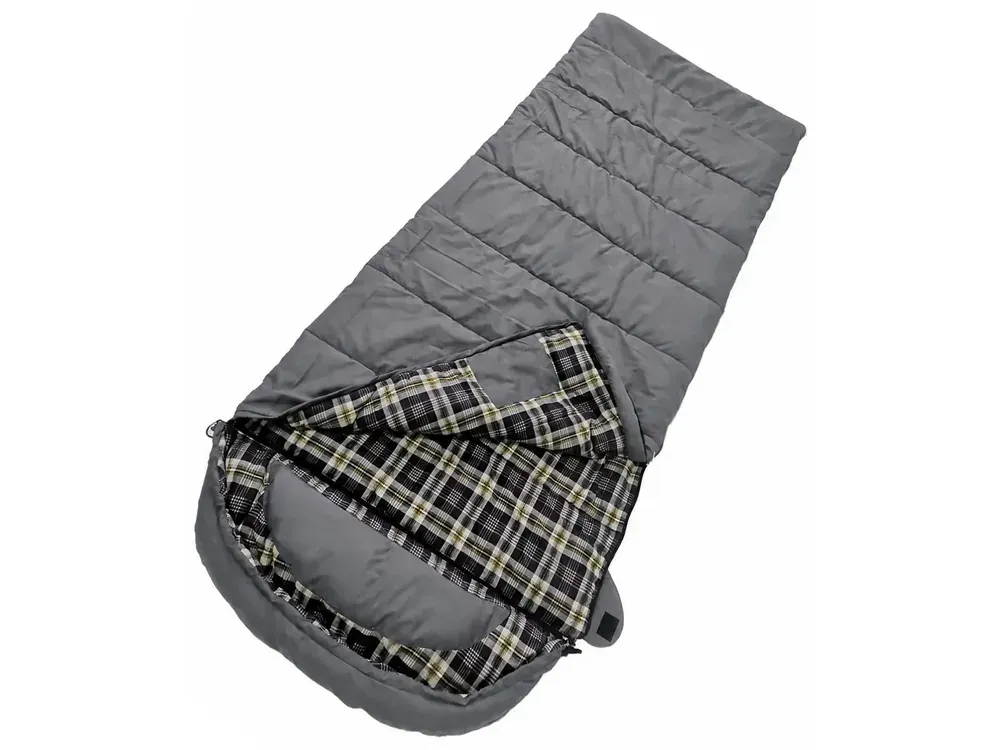
| Cotton canvas and flannel | SL110 canvas flannel, 2,900 g; SL111 large canvas flannel, 4,400 g; SL112 canvas with coral fleece, 3,800 g | Gentlest cycle, mild detergent; these are the heaviest bags in the range and take the longest to dry | Wash only when needed — the weight makes machine washing hard work, and incomplete drying is the main risk |
| Heated bags (USB 5V/2A carbon fibre) | SLH01 heated envelope, 5V carbon fibre heater with battery inner pocket, 1,800 g | Remove the power bank first — it is not included with the bag and must never be washed; follow the care label for the heating zones | Treat the heating system as electronics, not ordinary fabric; check the controller and cable are dry before the next use |
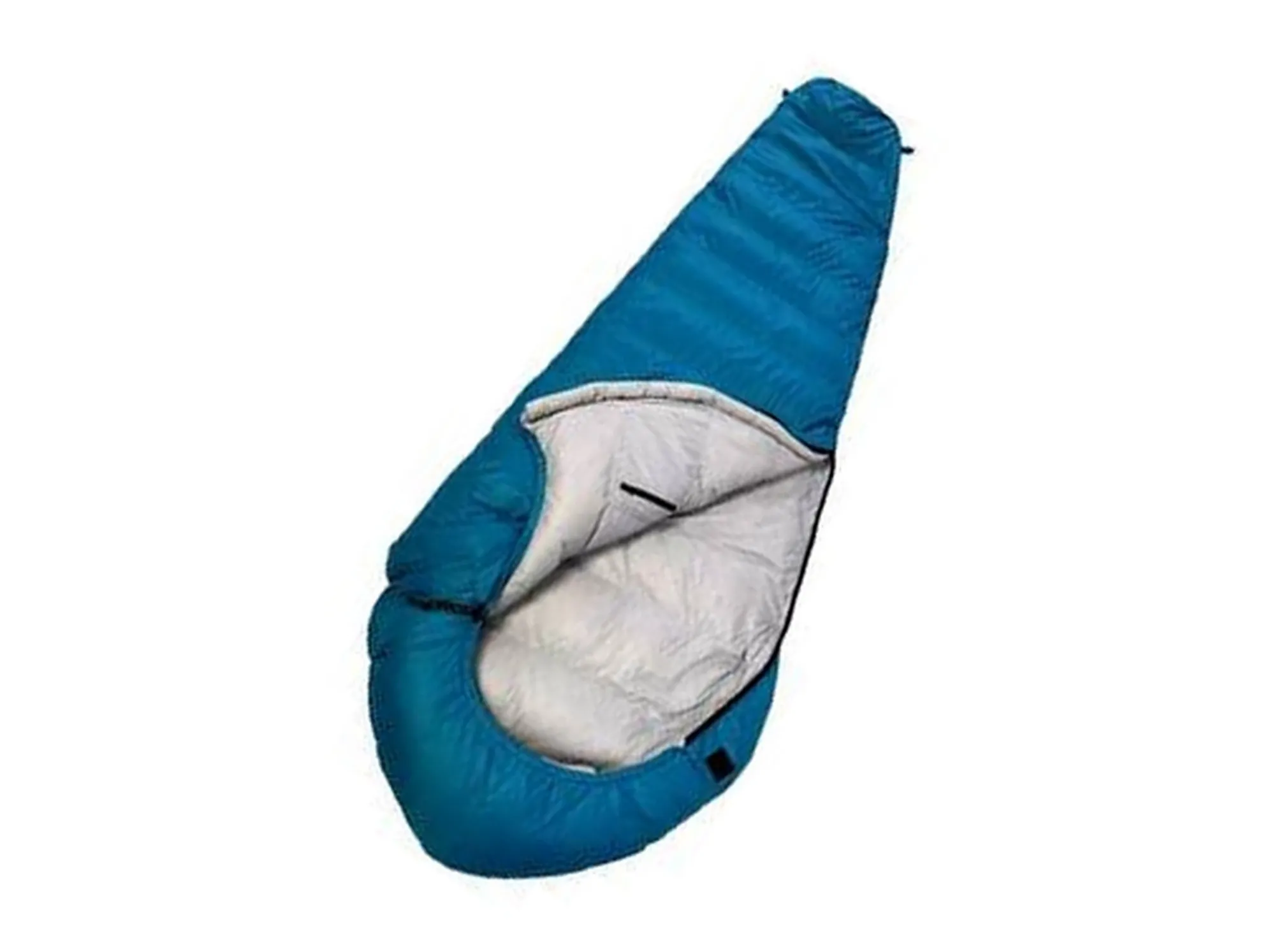
Two habits cause most wash damage. The first is using too much detergent or the wrong kind — residue stays in the filling, flattens it, and attracts dirt faster next time. Use a small amount of mild detergent and rinse until the water runs clear. The second is wringing or twisting the bag to get the water out, which breaks down filling and strains seams. Press the water out gently instead, and lift a wet bag with both hands supporting its full weight — a soaked 4.4 kg canvas bag is far heavier than its dry weight, and a zip or a seam can tear under that load.
For a detailed look at what each filling is and who it suits, see our guide to down or synthetic filling and our guide to shell and lining fabrics.
Drying: the step buyers skip, and the one that matters most
A bag that goes into storage even slightly damp will smell, lose loft, and in the worst case grow mould — and the customer will blame the bag, not the drying. Drying is therefore not the end of washing; it is the part that decides whether the wash helped or hurt.
Dry the bag fully, inside and out, before it is stored. Air drying flat or hung in a ventilated space is the safest method for every filling. Down takes the longest and needs the most patience: shake and redistribute the down gently as it dries so it does not settle into clumps. Hollow fibre dries noticeably faster, which is one of its practical advantages for rental fleets and hire stock. Cotton canvas and flannel dry the slowest of all — a heavy canvas bag can feel dry on the outside while the lining and filling are still damp inside, so give it extra time and check the thickest seams before packing it away.
If the care label allows a tumble dryer, use the lowest heat setting and stop to check the bag regularly. High heat damages shell coatings, melts or distorts synthetic fibres, and can harm the heating elements in a heated bag. When in doubt, air dry — it is slower, but it never damages the bag. For how temperature ratings are measured and what they mean for the user, see our guide to sleeping bag temperature ratings.
Storage and compression: loose for the season, compressed only for the trip
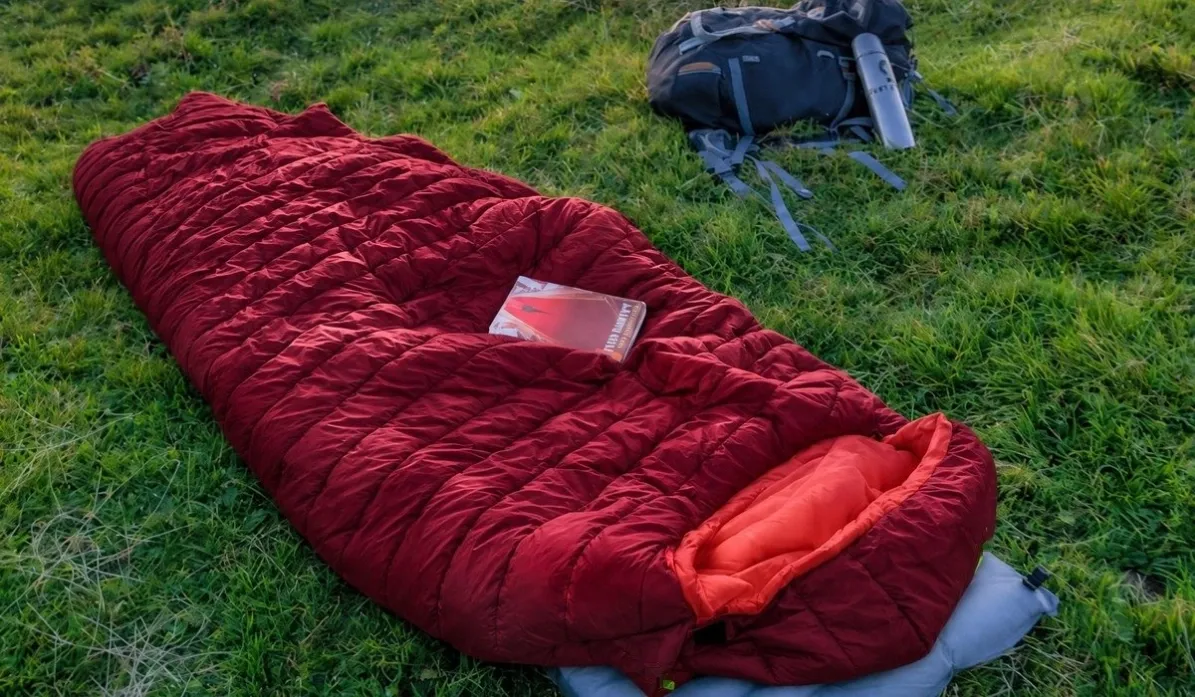
This is the mistake we see most often, and the easiest to fix. A compression sack is a travel tool, not a storage solution. A bag left compressed for months loses loft because the filling stays flattened, and down in particular may never fully recover its original loft. The rule is: compress for the journey, store loose at home.
For storage between trips, keep the bag in a large, breathable cotton storage sack or hung in a wardrobe — loose, dry, and with air circulating around it. Never store a bag in a sealed plastic bag or a damp garage: trapped moisture is what causes odour and mould. A bag stored loose will loft up again quickly on the next trip; a bag stored compressed will feel flat and cold on the first night out, and the customer will think the bag has worn out.
For transport, compression is fine and expected. Our bags are designed to pack down — a light envelope such as SL103 weighs only 800 g, while a large double such as SL102 packs to 4,700 g — but the compression should last for the journey, not the season. When your customer gets home, the first thing they should do is take the bag out of its stuff sack, air it, and hang it loose. Put that one sentence on your care card and you will prevent most of the storage complaints we ever hear about.
If you are choosing sizes for your range, our guide to how to choose a sleeping bag size covers single versus double and length and width by market.
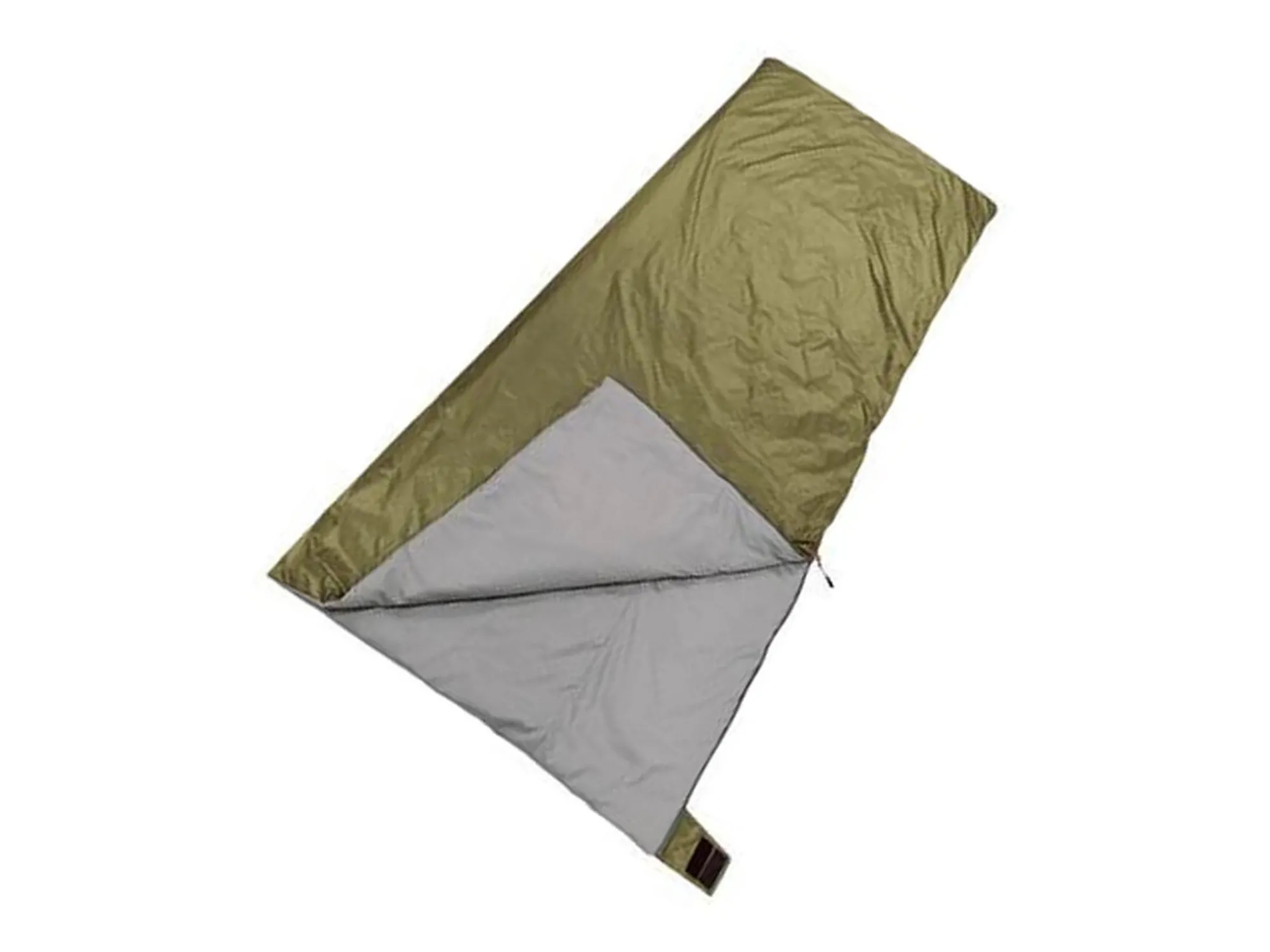
SL103 envelope sleeping bag — 800 g; compress it for the trip, store it loose at home.
FAQ
Q1: How often should a sleeping bag be washed?
As rarely as possible. Air it out after every trip and spot-clean small marks; wash it fully only when it smells or is visibly soiled. Every wash costs a little loft, so fewer, gentler washes keep the bag performing longer.
Q2: Can a down sleeping bag be machine washed?
Check the care label first — it is the final word for that bag. In general, down needs the gentlest cycle, a mild detergent, thorough rinsing, and complete drying before storage, because wet down clumps and loses insulation until it is fully dry.
Q3: Can a heated sleeping bag be washed?
Remove the power bank first — it is never washed and is not included with the bag. Follow the care label for the heating zones and controller, and make sure everything is dry before the next use. Treat the 5V carbon fibre heating system as electronics, not ordinary fabric.
Q4: Why does my sleeping bag feel flat after a season in storage?
It was probably stored compressed. Filling kept flattened for months loses loft, and down may never fully recover. Store the bag loose in a large breathable sack or hung up, and compress it only for travel.
Q5: What is the safest way to dry a sleeping bag?
Air dry it flat or hung in a ventilated space until it is completely dry inside and out — including the thickest seams. Down and cotton canvas take the longest. Avoid high heat, which damages shell coatings and synthetic fibres.
What to do next
Good care is a selling point, not an afterthought. A care card in the packaging, a short version on your product page, and a reminder at the till will cut returns and keep your customers' bags performing for more seasons — and customers who trust a bag come back to the shop that sold it to them.
If you are building your sleeping bag range, browse our envelope sleeping bags, mummy sleeping bags, canvas and flannel sleeping bags, kids' sleeping bags, and heated sleeping bags, or contact us for a quotation — samples in 7 days, bulk lead time 45–50 days, with third-party QC on every order.