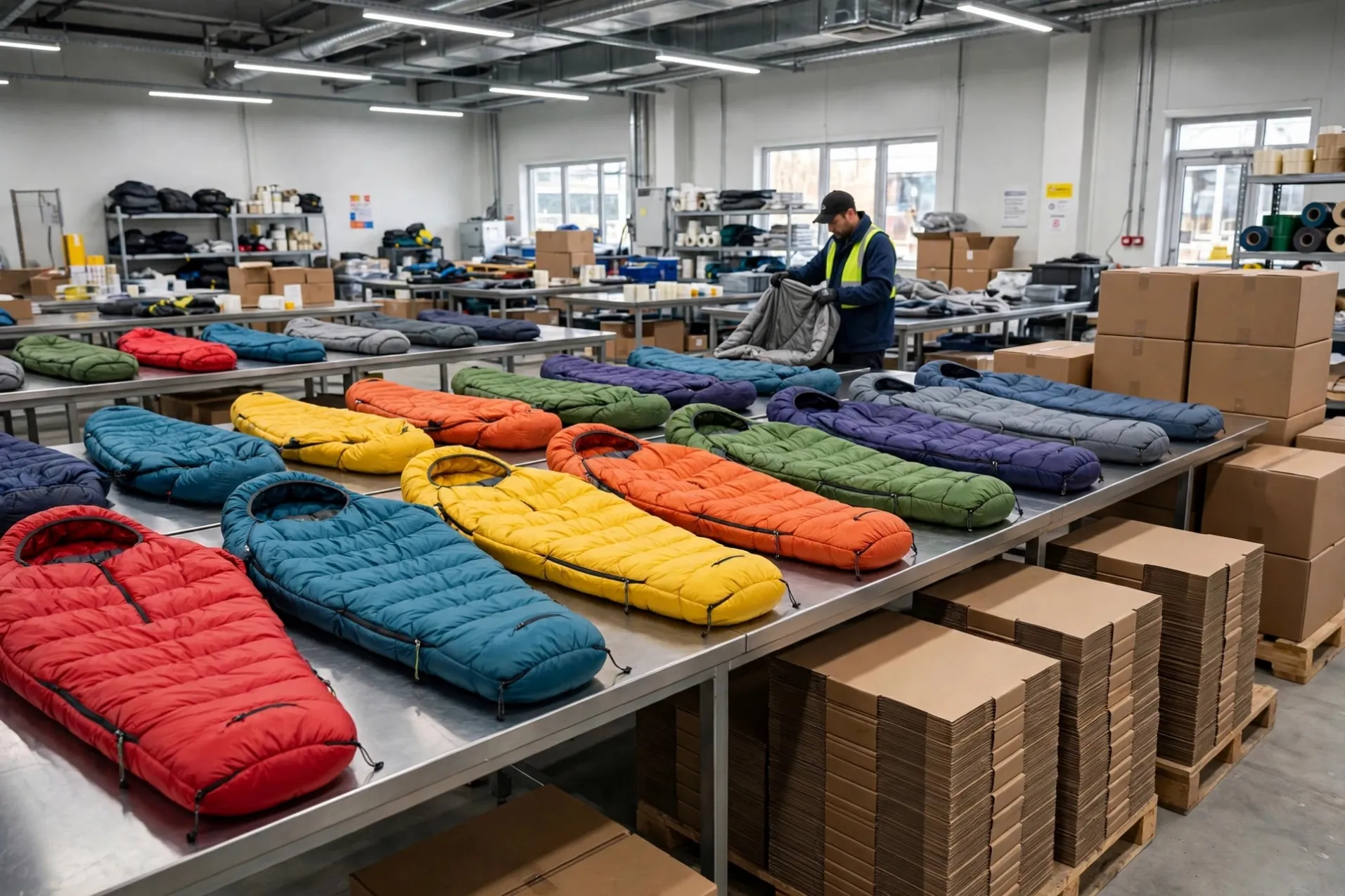
Down or Synthetic? How to Choose the Filling for Your Sleeping Bag Line
Down and hollow-fibre synthetic fillings compared on warmth, weight, wet performance and price — a sourcing guide for brands and distributors.
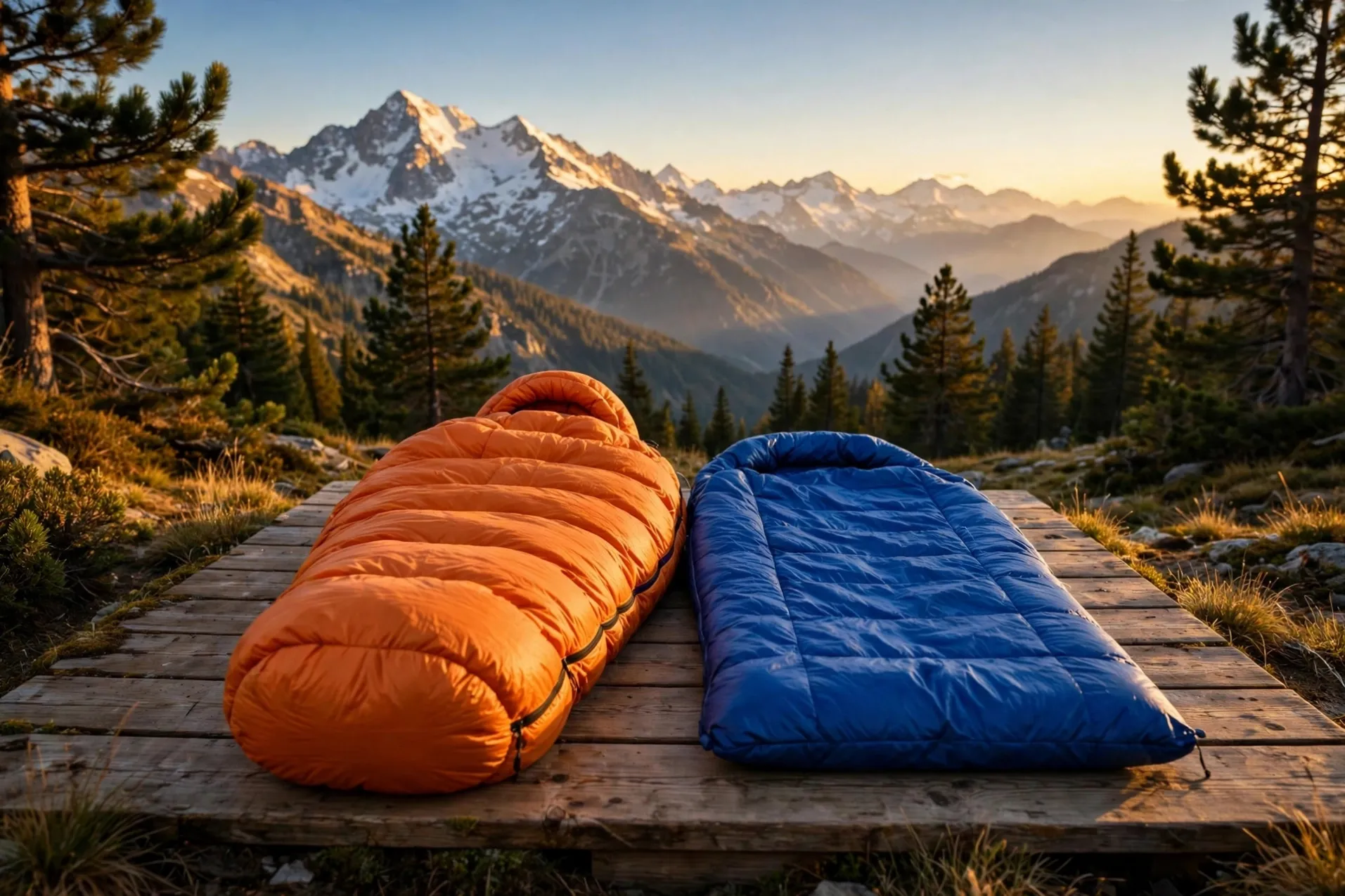
The filling decides a sleeping bag's warmth, weight, pack size and price — and it is the decision your customers feel on the first cold night. Both down and synthetic fillings have a place in a well-built range. Here is how we help buyers choose.
Down: maximum warmth per gram
Down traps the most air for the least weight, compresses smallest, and lasts for years. Our down mummy bag (SL109) uses 650 g of 90/10 grey duck down in a 380T down-proof nylon shell and weighs just 1,150 g — the kind of spec weight-conscious trekking customers pay for. Down's weaknesses are just as clear: it loses insulation when wet, needs down-proof fabrics and careful construction, and costs more. It belongs in your premium, weight-led lines.
Synthetic: the dependable all-rounder
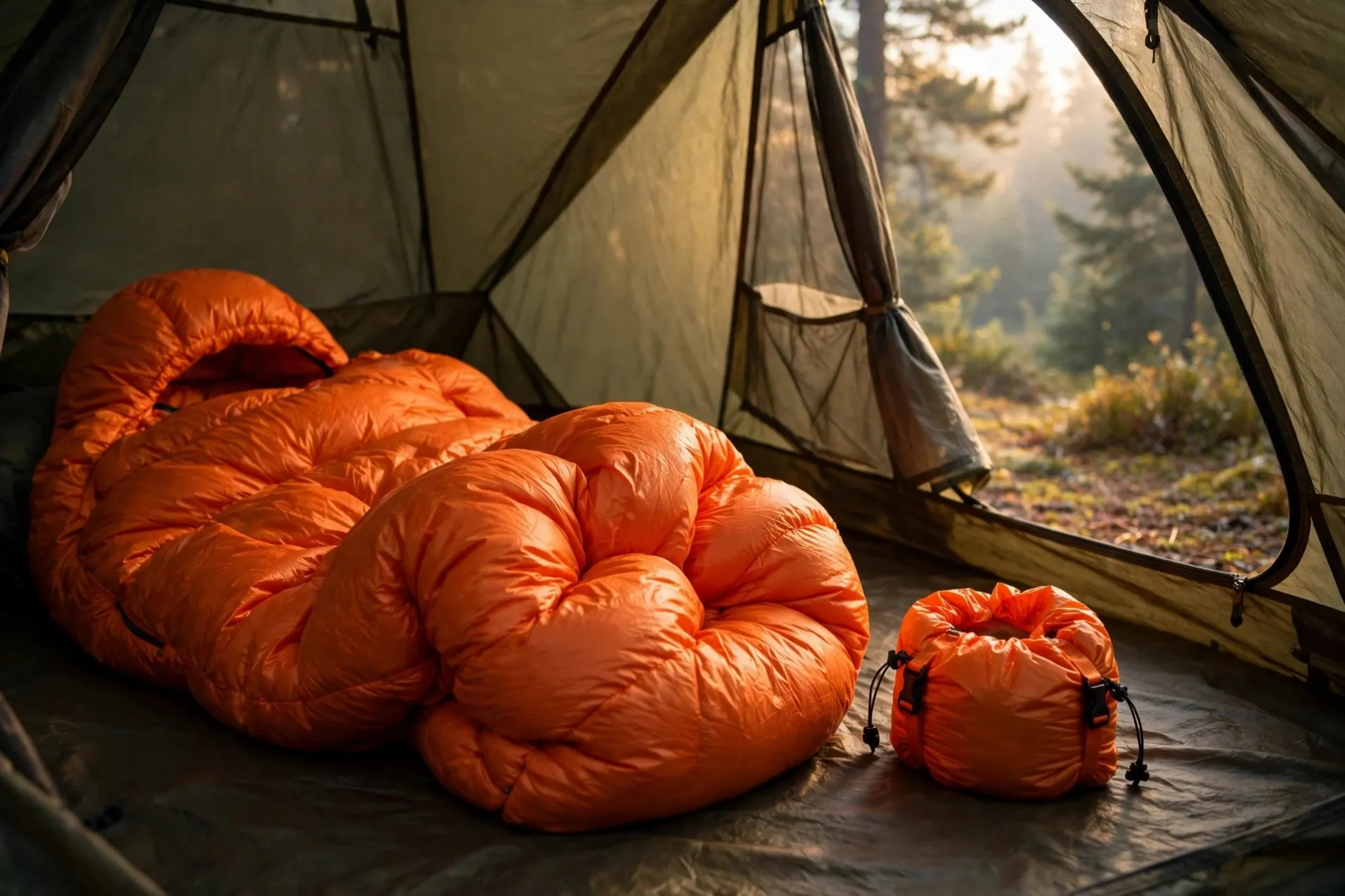
Modern hollow-fibre and silk-cotton fillings cost less, keep working when damp, dry faster and are easier to wash and store. That is why most of our range — envelope, mummy, canvas-flannel and kids' models — uses bonded hollow fibre or silk cotton, in weights from a summer-light 80 g/m² to double-layer builds for sub-zero nights.
Special fibres worth knowing
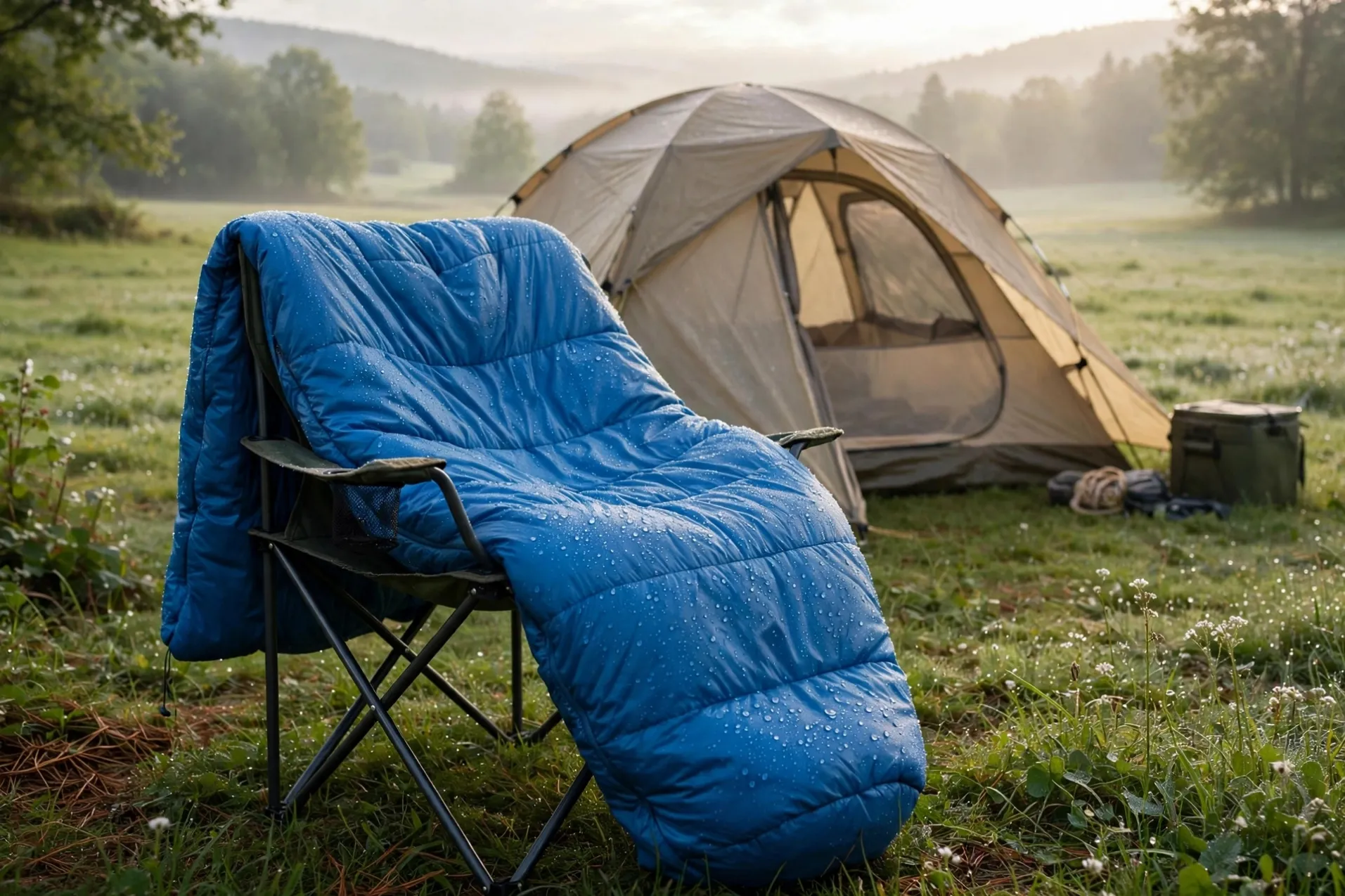
Buyers are also asking for alternatives: our soybean-fibre envelope bag (SL101) uses a plant-based filling that markets well to eco-conscious customers, at a mid-range weight and price. Heated models pair synthetic filling with USB carbon-fibre heating zones — a different answer to the same cold problem.
A simple rule for your range
- Premium trekking line → down, sold on weight and pack size
- Volume family and promotional lines → synthetic, sold on value and easy care
- Eco-positioned line → soybean fibre
- Cold-market differentiator → heated models
Tell us your price point and your customers' climate, and we will match filling type and weight to it — samples are ready in 7 days.