
RET, Hydrostatic Head and Air Permeability: How to Read a Waterproof Breathable Sleeping Bag Fabric — and Write It Into Your Spec Sheet
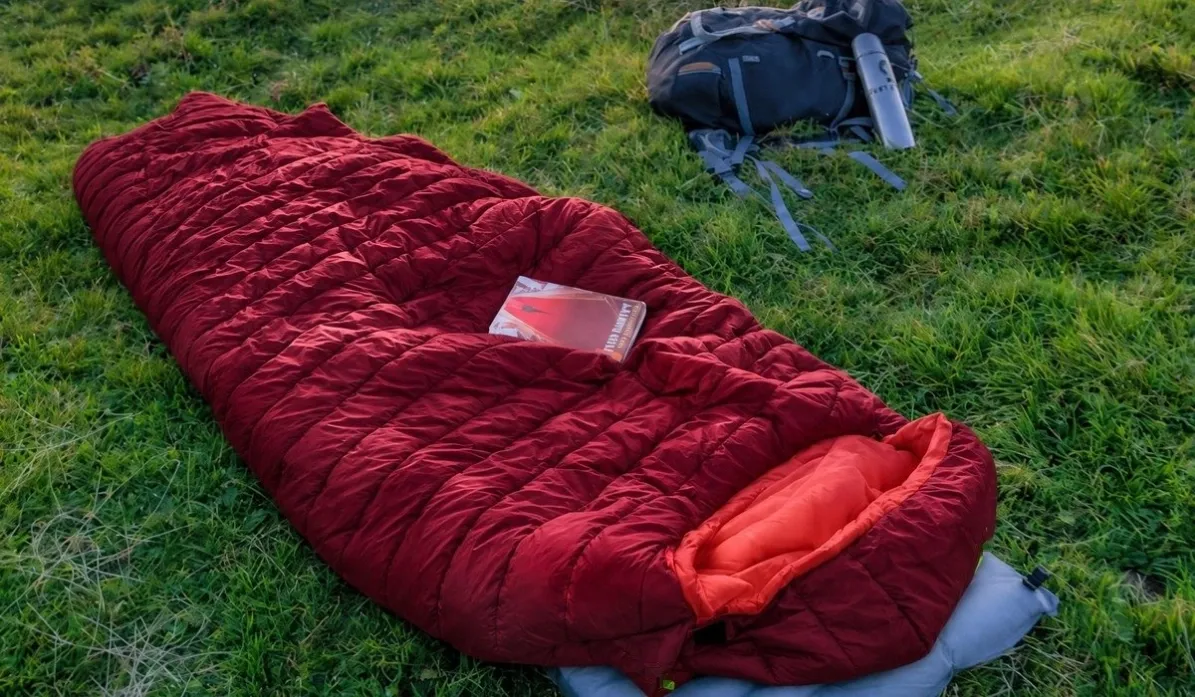
Short answer: a waterproof breathable sleeping bag shell is judged by three numbers, not one. Hydrostatic head tells you how much water pressure the fabric resists, RET tells you how easily sweat vapour escapes, and air permeability tells you how much wind gets through. Read together, they tell you whether a shell will keep rain out, stay comfortable inside, and block wind — or fail at one of the three. This guide explains what each number measures, the generic ranges buyers use to compare fabrics, and how to write all three into a fabric specification sheet your supplier can actually work to.
What each of the three numbers measures
Hydrostatic head — waterproofing. This is the height of a column of water the fabric can hold back before water starts to leak through, measured in millimetres under the ISO 811 test. A higher number means the fabric resists more water pressure. As a rough guide buyers use: around 1,500–3,000 mm handles light rain and damp ground, 5,000–10,000 mm covers steady rain, and above 10,000 mm is aimed at heavy, prolonged rain. The number only means something with the test method stated — always ask for ISO 811.
RET — breathability. RET stands for resistance to evaporative heat transfer, measured in m²·Pa/W under the ISO 11092 sweating guarded hot plate test. It measures how much the fabric resists water vapour passing through. Lower is better: a RET under 6 is generally described as highly breathable, 6–13 as breathable, and above 13 as limited breathability. This is the number that decides whether the sleeper wakes up dry or clammy inside a waterproof shell.
Air permeability — windproofing. This measures how much air passes through the fabric, usually in mm/s under the ISO 9237 test. Lower means more windproof: a shell aimed at windproofing will often measure in single digits, while a light, airy summer fabric can measure in the hundreds. Note that air permeability is not the same as breathability — a fabric can block air almost completely and still let vapour through, if it uses a membrane. That distinction matters, and it is why you need all three numbers.
Metric | What it measures | Unit | Test standard | Better direction | Generic range buyers use |
|---|---|---|---|---|---|
Hydrostatic head | Waterproofing — water pressure resisted before leaking | mm | ISO 811 | Higher | 1,500–3,000 mm light rain; 5,000–10,000 mm steady rain; above 10,000 mm heavy rain |
RET | Breathability — resistance to water vapour passing through | m²·Pa/W | ISO 11092 | Lower | Under 6 highly breathable; 6–13 breathable; above 13 limited |
Air permeability | Windproofing — air passing through the fabric | mm/s | ISO 9237 | Lower for windproofing | Single digits for a windproof shell; hundreds for an airy fabric |
One more term you will meet: MVTR (moisture vapour transmission rate, in g/m²/24h). Some suppliers quote MVTR instead of RET. Both describe breathability, but they come from different test methods — do not compare an MVTR number with a RET number. Pick one method, state it in your spec sheet, and compare like with like.
Why the three numbers must be read together
No single number describes a shell fabric. The three interact, and a fabric that scores well on one can fail on another.
Waterproofing trades against breathability. A coating or membrane that blocks liquid water can also block water vapour. A shell with a very high hydrostatic head and a high RET will keep rain out — and trap sweat inside. The sleeper stays dry from the rain and damp from their own body heat, which feels just as uncomfortable. When you compare fabrics, look for the combination: a solid hydrostatic head for your rain conditions, with a RET low enough that vapour escapes.
Windproofing is not the same as breathability. Air permeability measures air; RET measures vapour. A membrane shell can have very low air permeability — almost no wind gets through — and still have a low RET, because vapour passes through the membrane itself rather than through gaps in the weave. So a low air permeability number does not mean the bag will not breathe. It means the wind is blocked, which is usually what you want in a sleeping bag shell.
Construction decides the numbers. The same three numbers can come from different builds: a PU coating on the fabric, a laminated microporous membrane, a hydrophilic (non-porous) membrane, or an electrospun nanofiber membrane — one membrane type among others. Each construction reaches its numbers differently, and each has its own cost, weight, feel and durability. Ask your supplier which construction sits behind the numbers, not just what the numbers are — that is what tells you whether the fabric will still perform after washing, packing and a season of use.
How to write these into your fabric spec sheet
A spec sheet your supplier can work to names the metric, the test method, and the value or band — for all three numbers, not just one. Write it like this:
- Shell fabric: fibre and weave (for example, nylon or polyester ripstop), fabric weight in g/m², and construction (coated or laminated, and which membrane type).
- Hydrostatic head: required band, test method ISO 811, and a lab test report for the production fabric.
- RET: required band, test method ISO 11092, and a lab test report for the production fabric.
- Air permeability: required band, test method ISO 9237, and a lab test report for the production fabric.
- Lining: state the lining fabric and whether it must be down-proof, if the filling is down — the shell and lining work as a pair, and the lining affects how the bag feels and how the filling behaves.
Three common mistakes to avoid. First, comparing numbers from different test methods — an RET from one method and an MVTR from another are not the same scale. Second, chasing the highest hydrostatic head without checking the RET — the most waterproof shell in the range can be the least comfortable to sleep in. Third, accepting a number without a test report. Ask for the lab report, check the method is stated on it, and confirm the report covers the production fabric, not a sample swatch from a different batch. For how shell and lining fabrics are chosen in general, see our guide to sleeping bag shell and lining fabrics; for how the filling interacts with the shell, see our guide to down or synthetic filling.
FAQ
Q1: What RET should I ask for in a sleeping bag shell?
As a generic guide, a RET under 6 is described as highly breathable and 6–13 as breathable. For a bag that will be used in rain, aim for the lower end of the range you can afford — but always pair the RET requirement with a hydrostatic head requirement, because the two are traded against each other.
Q2: Is a higher hydrostatic head always better?
No. A higher number resists more water pressure, but it usually costs more, can add weight, and often comes with a worse RET. Choose the band that matches the rain your customers will actually sleep in — light rain, steady rain or heavy prolonged rain — and spend the rest of the budget on breathability and feel.
Q3: What is the difference between RET and MVTR?
Both describe breathability, but they are measured differently: RET (ISO 11092) measures resistance to vapour, while MVTR measures how much vapour passes in a day. The numbers are not interchangeable. State one method in your spec sheet and compare suppliers on that method only.
Q4: Does low air permeability mean the bag will not breathe?
No. Air permeability measures air passing through; RET measures vapour passing through. A membrane shell can block wind almost completely and still let vapour out through the membrane. Check the RET to judge breathability, and the air permeability to judge windproofing.
Q5: Should I ask for a test report for the fabric?
Yes. Ask for the lab report for each of the three metrics, with the test method stated, covering the production fabric. A number without a method and a report is a claim, not a specification — and a spec sheet is only useful if your supplier can be held to it.
Next step
Do not buy a waterproof breathable shell on a single number. Write all three — hydrostatic head, RET and air permeability — into your spec sheet with their test methods, ask for the lab reports, and check the combination against the rain and the sleeper your bag is built for. Then confirm the feel and the performance with a sample: samples are ready in 7 days, and all of our sleeping bags are tested to EN ISO 23537-1:2022. Browse the mummy sleeping bag range or the envelope sleeping bag range, or contact us with your fabric requirements and target market, and we will recommend a shell construction and send you a quotation.