How to Choose a Sleeping Bag Size for Your Customers: Length, Width and Single vs Double
Intro
A sleeping bag that is too short leaves your customer's feet cold; one that is too wide wastes the warmth their body worked to build. Size is the first thing an end user notices — and the first reason a retail buyer gets returns. This guide explains how to read sleeping bag sizes, how length and width change warmth and comfort, and which of our sizes fit which buyers, so you can stock the right sizes for your market the first time.
How Sleeping Bag Sizes Are Written
Sleeping bag sizes are usually given as length × width in centimetres. Two details in our catalogue are worth knowing:
- A "+" in the length, e.g. (190+30) × 75 cm, means the bag is 190 cm long with a 30 cm hood section on top — the hood adds room for the head and shoulders without making the whole bag longer.
- Mummy bags add a third number, e.g. 220 × 80 × 55 cm, which is length × shoulder width × foot width. The tapered foot is what makes a mummy bag warm: less empty space to heat.
When you compare sizes across suppliers, check whether the length includes the hood. A "190 cm" bag with a hood and a "190 cm" bag without one are not the same bag.
Length: Match the Bag to the User's Height
The rule is simple: the bag should be at least 15–20 cm longer than the person using it, so feet do not press against the end and compress the filling — compressed filling loses insulation.
Our range covers the common heights:
SL105 hooded envelope — (170+30) × 75 cm — Shorter adults and teenagers; a lighter, compact option at 840 g
SLH02 heated envelope — 180 × 75 cm — Average-height adults who want heating
SL100 envelope — 190 × 75 cm — Standard adult size
SL106 envelope — (190+30) × 75 cm — Standard adults who want a hood
SL101 envelope — (200+30) × 85 cm — Taller adults
SL104 envelope — 210 × 80 cm — Tall adults
SL107 mummy — 220 × 80 × 55 cm — Tall adults and emergency-relief use
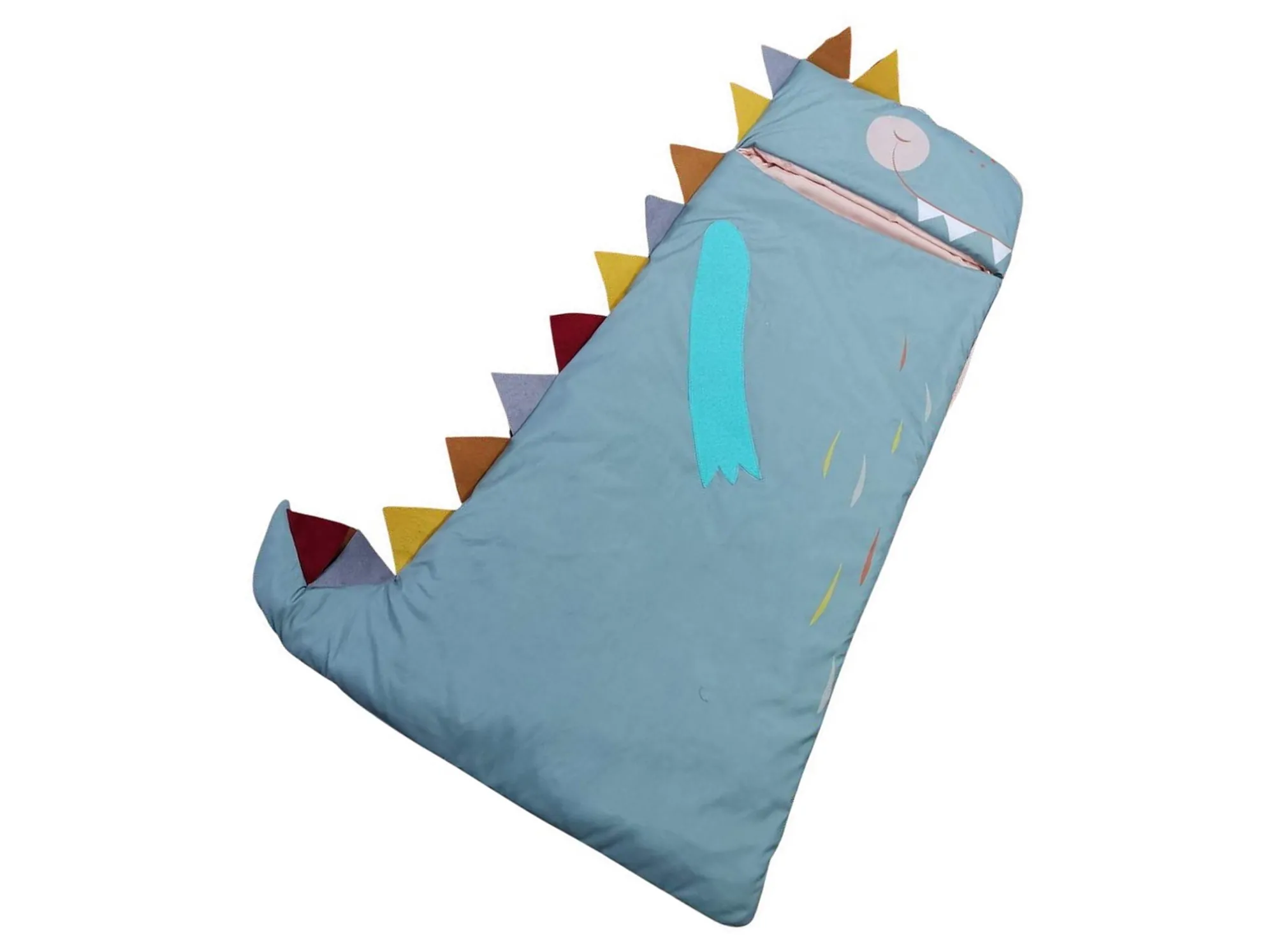
For children's lines, size works the same way but the numbers are smaller: our KSL02 is (140+30) × 70 cm for children, and KSL03 is 100 × 48 cm for toddlers. A child grows fast, so buyers usually choose a size with room to grow into — but not so much room that the child slides around inside and loses warmth.
Practical tip for buyers: if your market is Northern Europe, where average height is taller, weight your order toward the 200 cm and longer sizes (SL101, SL104, SL107, SL112). For markets where customers are shorter on average, the 170–190 cm sizes (SL105, SL100, SL106) will turn over faster.
Width: Comfort vs Warmth
Width is a trade-off. A wider bag is more comfortable — the user can turn over, bend their knees, and sleep on their side. A narrower bag is warmer, because there is less air inside for the body to heat. That is why mummy bags taper toward the feet.
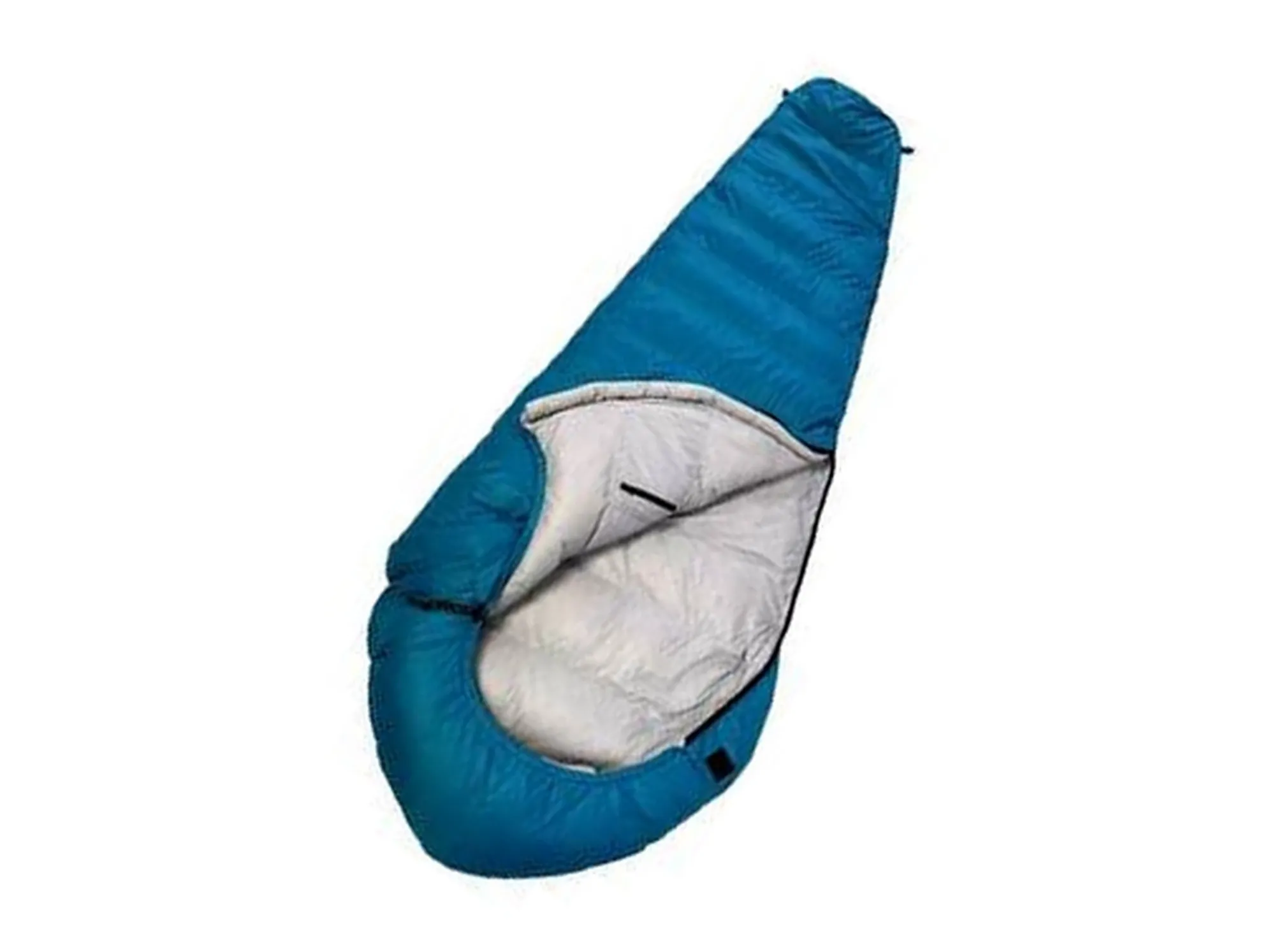
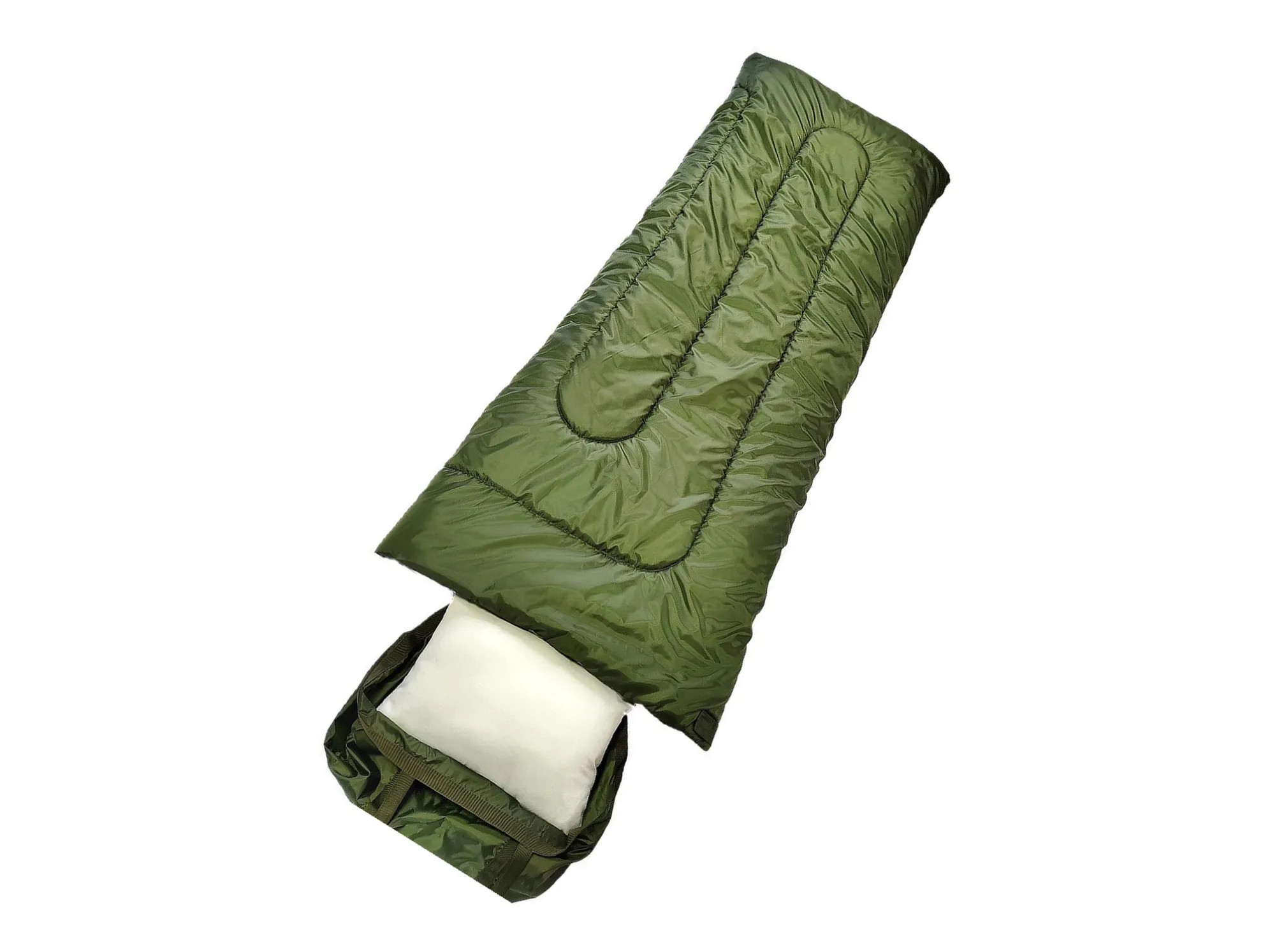
75 cm wide (SL100, SL105, SL106, SLH01, SLH02, SL109): the standard single size. Warm and packable; best for camping and hiking buyers.
80–85 cm wide (SL102 single, SL103, SL104, SL107, SL108, SL110): roomier singles. Good for car camping, festivals and buyers who sleep restlessly.
100 cm wide (SL111, SL112): wide singles for larger users or for buyers who want a roomy, home-style feel — canvas and flannel bags like these sell well to glamping and family-camping customers.
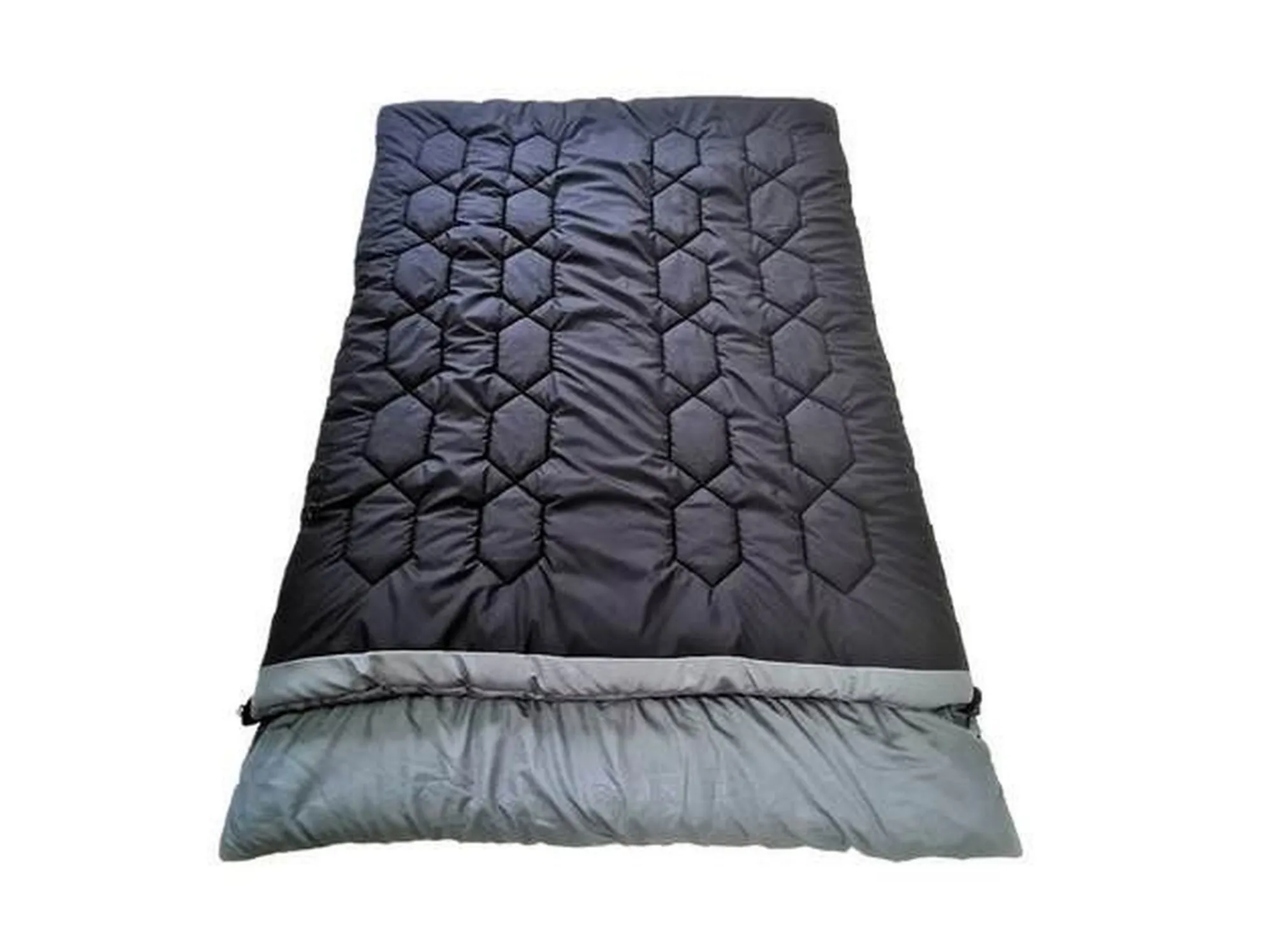
150 cm wide (SL102 double): a true double bag for two people. Two people sharing one bag stay warmer together, and one double bag costs less and packs smaller than two singles — a strong point for couples' camping lines.
When a retail buyer asks "which width sells best?", the honest answer is that 75–85 cm singles are the safe core of any range, while 100 cm and double bags are useful additions for family and couples' assortments — not the whole assortment.
Single vs Double: Which Should You Stock?
Single bags are the default: they fit one person, they are easier to sell, and if one half of a couple wants a different warmth level, two singles solve the problem. Double bags have their place — couples camping, family holidays, and car camping where weight matters less.
Our double option is the SL102 heated envelope, available in both single size ((195+25) × 80 cm, 2,350 g) and double size ((195+25) × 150 cm, 4,700 g). The double is the same bag, wider — so if you already stock the single SL102, adding the double needs no new explanation for your customers. Both use the same USB 5V/2A carbon-fibre heating system with three levels (30–55 °C); the power bank is not included.
A simple stocking rule: start with singles in two lengths (a standard 190 cm and a long 210–220 cm), then add one double and one wide option once you know which customer group buys from you. That covers most buyers without tying up stock in sizes that move slowly.
FAQ
How do I know if a sleeping bag will fit a tall customer?
Check the length including the hood. The bag should be at least 15–20 cm longer than the user. Our longest bags are 220 cm (SL107 mummy and SL112 canvas envelope), which suit users up to about 200 cm tall.
Is a wider sleeping bag always better?
No. Wider is more comfortable but less warm, because the body has to heat more air inside. For cold-weather camping, a narrower mummy bag such as the SL109 (75 cm at the shoulder, tapering to 50 cm at the foot) holds warmth better than a wide rectangular bag.
What is the difference between a single and a double sleeping bag?
A single fits one person (usually 75–100 cm wide); a double fits two (150 cm wide in our SL102). Doubles are warmer per person and pack smaller than two singles, but two singles give each sleeper their own warmth level.
Next Step
Size is only one part of choosing a sleeping bag line — filling, shell fabric and temperature rating matter too. Browse our envelope sleeping bags, mummy sleeping bags, heated sleeping bags and kids' sleeping bags to compare sizes across the full range, or contact us for a quotation on the sizes your market needs. New to OEM? See how an OEM sleeping bag order works, from brief to bulk. Samples are ready in 7 days and bulk orders take 45–50 days. All our sleeping bags are tested to EN ISO 23537-1:2022, and every order is checked by our long-term third-party QC partner before shipment.