Sleeping Bag Shell and Lining Fabrics Explained: What 190T, 210T and Cotton Flannel Mean for Your Customers
Short answer: the shell decides how a sleeping bag handles wind, rain and wear, while the lining decides how it feels against the skin. Polyester shells in 170T–240T cover most camping needs, nylon shells in 380T–450T are the light, tough choice for hiking lines, and cotton canvas with a flannel lining is the heavy, home-comfort option for glamping and caravan buyers. If you can explain these three choices to your customers, you can steer them to the right bag — and the right price point. This guide explains each fabric with real models from our range.
What the "T" number means — and what it does not
On a sleeping bag spec sheet, "T" stands for the fabric's thread count: roughly, how many threads are woven into the cloth. A higher number usually means a denser, tighter weave. But the T number alone does not tell you the whole story — the fibre matters just as much. A 190T polyester and a 190T nylon behave differently, and a waterproof finish or a calendered (heat-pressed) surface changes the fabric again.
What to take from the number:
- 170T–190T polyester: the workhorse range. Light enough to pack, strong enough for regular camping, and the most common shell in our range.
- 210T–240T polyester: a denser, smoother weave. Used on our heavier or more premium-feel models.
- 380T–450T nylon: a much tighter weave, built for lightness and abrasion resistance — the choice for hiking and mountain lines.
- Cotton canvas: no T number at all. A completely different feel — heavy, breathable, and chosen for comfort, not for packing light.
Never judge a bag by the T number alone. Ask what the bag is for, then match the fabric to the use.
Polyester shells — the all-round choice for most of your customers
Polyester is the default shell fabric in our range, and for good reason: it is light, dries fast, holds its shape, and keeps its price accessible. Our polyester shells are listed as waterproof, and several are calendered — heat-pressed to make the weave tighter and smoother — or made in ripstop weave, where thicker threads are woven in at intervals to stop small tears from spreading.
Real examples from our range:
- SL100 — 190T polyester shell, waterproof, with a 190T pongee lining. A double-layer envelope, 190×75 cm, 2,000 g. A solid mid-range family camping bag.
- SL106 — our best-selling waterproof envelope: 190T polyester ripstop shell with water-repellent and waterproof finish, 190T poly pongee cire lining, 300 g/m² hollow fibre filling, 1,300 g. The ripstop weave is the detail to mention to customers who worry about durability.
- SL101 — 210T pongee shell, waterproof and calendered, with a 190T pongee calendered lining. A bigger envelope, (200+30)×85 cm, 3,000 g, filled with soybean fibre. The denser 210T shell gives it a smoother, slightly more premium hand feel than the 190T models.
- SL104 — 190T polyester shell, waterproof and calendered, with a polycotton lining. A large envelope, 210×80 cm, 1,200 g. A good example of a roomy bag where the shell does the weather work and the lining does the comfort work.
- SLH01 — our heated sleeping bag: 240T pongee shell, waterproof, with a 210T pongee lining and a USB 5V/2A carbon-fibre heating system (3 levels, 30–55 °C; power bank not included). The densest polyester shell in our heated range.
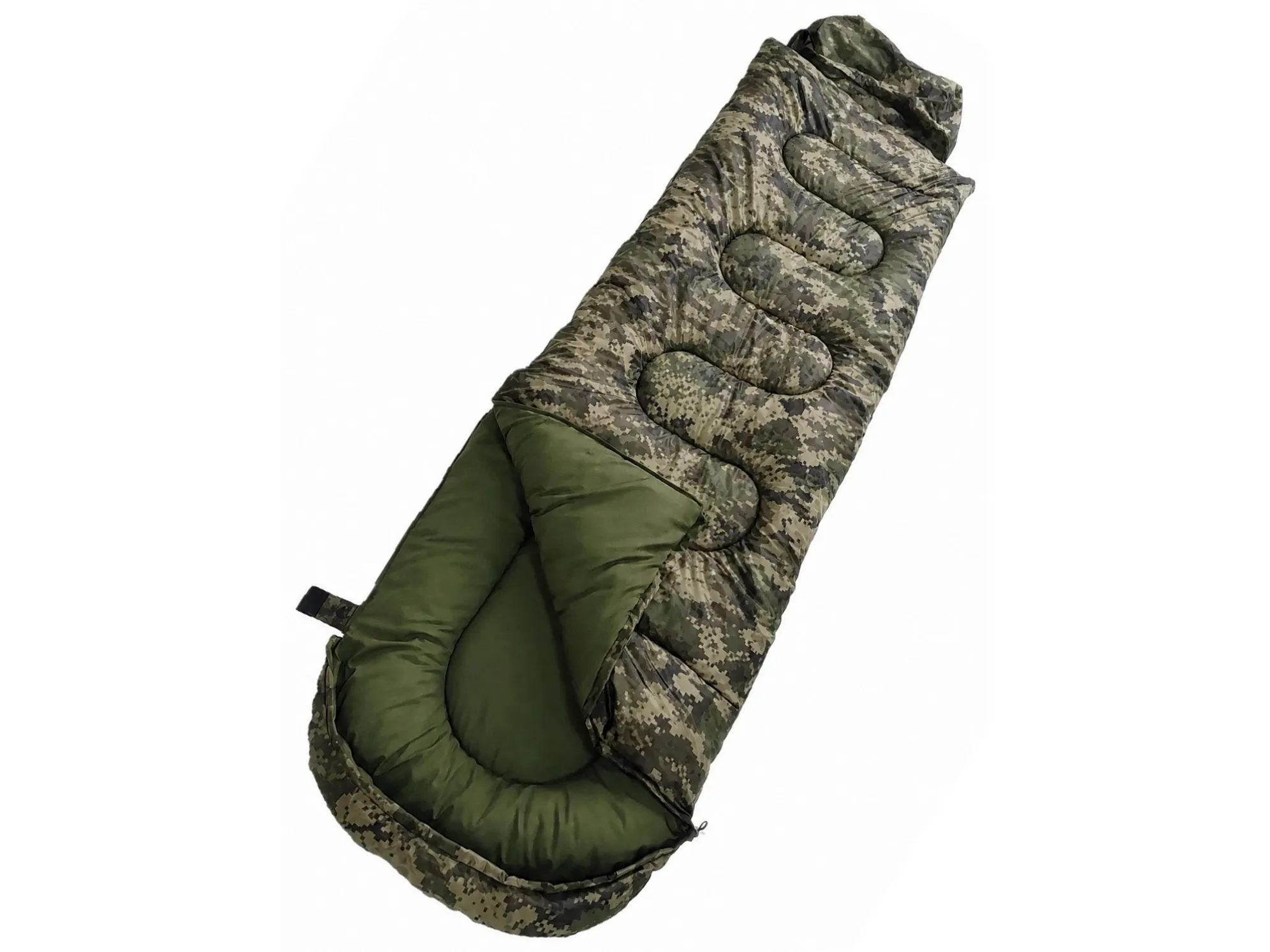
SL106 — 190T polyester ripstop shell, our best-selling waterproof envelope.
Stock polyester shells first if your customers are family campers, festival-goers, caravan users or general outdoor retailers — buyers who want a dependable, easy-to-care-for bag at a fair price. Browse the full envelope sleeping bag range.
Nylon shells — light and tough for hiking and mountain buyers
Nylon is lighter than polyester for the same strength, and it packs smaller. That is why it appears on our lightest and most performance-focused models. The trade-off is price: nylon bags cost more to make, so they sit at the higher end of a retail range — which is exactly where hiking and mountain buyers expect them.
Real examples from our range:
- SL103 — 450T nylon grid shell, waterproof, with a 210T pongee lining. A thin envelope, 191×84 cm, only 80 g/m² filling and 800 g. The lightest envelope in our range — a summer or travel option where every gram counts.
- SL108 — 380T nylon grid shell, waterproof and calendered, with a washed cotton lining. A lightweight mummy, (185+30)×84×61 cm, 100 g/m² filling, 840 g. A three-season bag for backpackers.
- SL109 — 380T grid nylon shell, waterproof and down-proof, with a 380T nylon down-proof lining. A down mummy, 215×75×50 cm, 650 g of 90/10 grey duck down, 1,150 g. The down-proof weave matters here: without it, fine down escapes through the fabric. This is the model to recommend when a customer asks for a serious cold-weather bag.
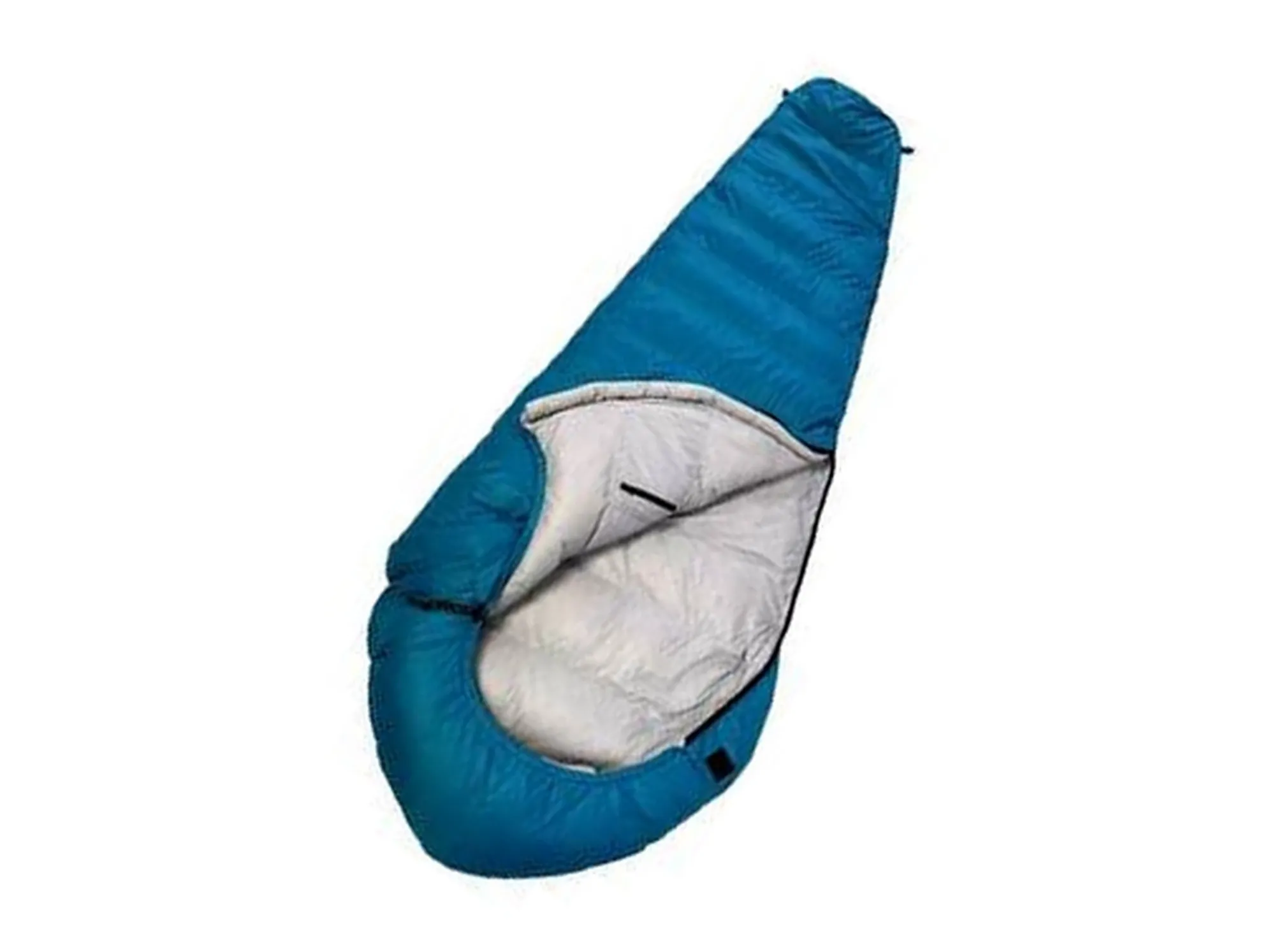
SL109 — 380T grid nylon shell, waterproof and down-proof, for cold-weather and mountain buyers.
Stock nylon shells first if your customers are hikers, backpackers or mountain shops — buyers who carry their bag and will pay more for less weight. Browse the full mummy sleeping bag range.
The lining is what your customer actually feels — pongee, polycotton, flannel and fleece
Buyers rarely ask about the lining by name, but it is the first thing they notice when they touch a bag in the shop. Our range uses four main lining types, each with a clear customer:
- Pongee (190T–210T): a smooth, light polyester lining. The standard choice — easy to slide into, quick to dry, and used across most of our envelope and mummy models, including SL100, SL101 and SL106. The safe default for a general camping line.
- Polycotton: a polyester-cotton blend. Softer and more breathable against the skin than pure polyester, with a slightly more natural feel. Used in SL104 and in our kids' model KSL02. A good middle ground when customers say polyester feels "plasticky".
- Cotton flannel: soft, warm and home-like. Used in our canvas series — SL110 and SL111 both pair a cotton canvas shell with a cotton flannel lining — and in SL25, a polycotton shell with a cotton flannel lining. These are heavy bags (SL110 is 2,900 g, SL111 is 4,400 g), so they are not for hikers. They are for glamping, caravan parks and buyers who want a bed-like feel outdoors.
- Coral fleece / coral velvet: a thick, plush lining for warmth and comfort. Used in SL112 (240 g/m² coral fleece lining with a 250 g/m² cotton canvas shell, 3,800 g) and in our kids' models KSL03 and KSL04 (260 g/m² coral velvet lining). The warmest-feeling lining in our range — worth showing to buyers who sell to families and cold-climate customers.
A simple way to explain it to a customer: the shell is the jacket, the lining is the shirt. Both matter, but the lining is what they feel first.
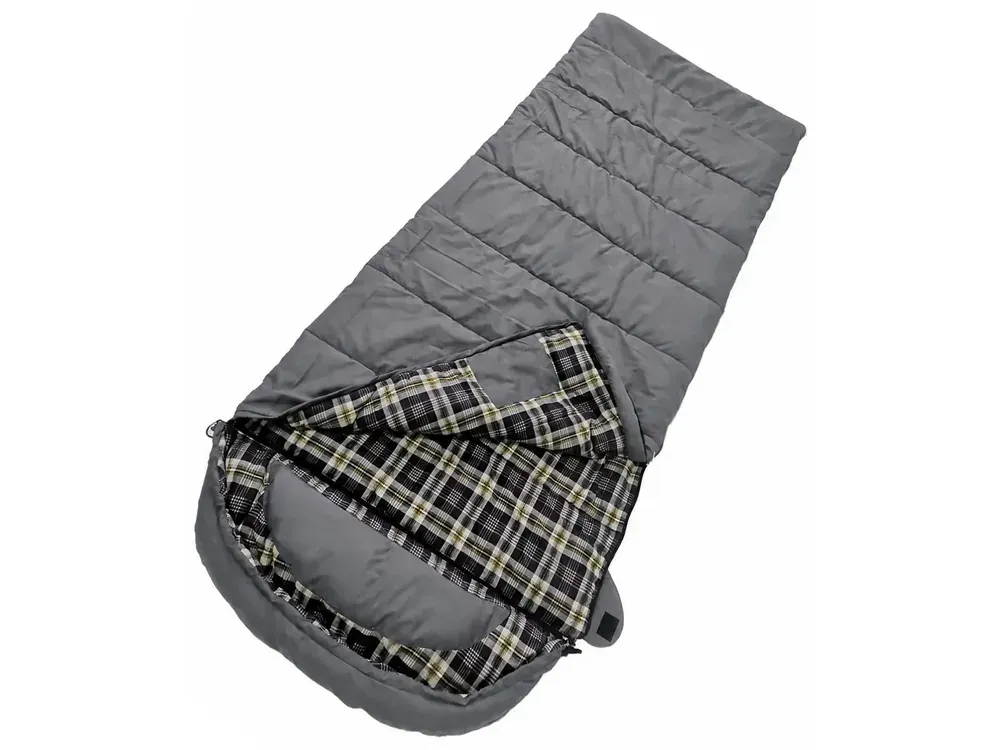
SL110 — cotton canvas shell with cotton flannel lining, a heavy home-comfort style for glamping and caravan buyers.
A quick fabric cheat sheet for your sales team
| Fabric | Where it sits in our range | Best for |
|---|---|---|
| 170T–190T polyester shell, pongee lining | SL100, SL105, SL106, SL107 | Family camping, general retail, best value |
| 210T–240T polyester shell, pongee lining | SL101, SL102, SLH01 | Premium-feel envelopes and heated bags |
| 380T–450T nylon shell | SL103, SL108, SL109 | Hiking, backpacking, cold weather |
| Polycotton lining | SL104, KSL02, SL25 | Customers who want a softer, more natural feel |
| Cotton canvas shell + cotton flannel lining | SL110, SL111 | Glamping, caravan, home-comfort buyers |
| Coral fleece / coral velvet lining | SL112, KSL03, KSL04 | Maximum warmth and comfort, families and kids |
All of our sleeping bags are tested to EN ISO 23537-1:2022, so once you have chosen the fabric, you can compare warmth on equal terms using the Comfort, Limit and Extreme ratings — see our guide to sleeping bag temperature ratings. Every model can be customised with your logo, colours and packaging. Samples are ready in 7 days and bulk lead time is 45–50 days, with quality checked by our long-term third-party QC partner.
FAQ
Q1: Is a higher T number always better?
No. A higher T number means a denser weave, but the fibre and the finish matter just as much. A 190T polyester ripstop shell (SL106) can be tougher in daily use than a plain 210T shell, and a 380T nylon shell (SL109) is chosen for lightness, not because its number is higher. Match the fabric to the use first; use the T number to compare bags made from the same fibre.
Q2: Which lining should I recommend to customers who dislike the feel of polyester?
Polycotton or cotton flannel. Polycotton (SL104, KSL02) feels softer and more natural than pure pongee while staying light. Cotton flannel (SL110, SL111) feels like bedding — the warmest, most home-like option, but the bags are heavy, so recommend it for glamping and caravan customers, not hikers.
Q3: Can we get the same model with a different shell or lining?
Yes — shell and lining are part of the customisation we offer as a supplier. Tell us the model you like and the fabric change you need, and contact us for a quotation. Note that changing the shell or lining can change the weight and the feel of the bag, so we recommend confirming the new combination with a sample first — samples are ready in 7 days.
Next step
Pick the fabric story that fits your customers — polyester for value and everyday camping, nylon for light and tough hiking lines, canvas and flannel for glamping comfort — then check the models behind it. Browse the envelope range, the mummy range and the canvas & flannel range, or contact us with your target market and we will recommend fabrics and models and send you a quotation.