Sleeping Bag Temperature Ratings Explained: Comfort, Limit and Extreme
What Comfort, Limit and Extreme really mean under EN ISO 23537-1:2022 — and how to spec the right rating for your market.

If you buy sleeping bags for resale, the temperature rating is the number your customers will judge you by. Print the wrong one, and a "warm" bag comes back as a return. Here is how the three ratings work, and how to choose them for your range.
The standard behind the numbers
Serious buyers in Europe and the USA look for ratings tested to EN ISO 23537-1:2022. The test uses a heated manikin in a controlled climate chamber, so results are comparable between suppliers — unlike in-house claims measured "by feel". All of our sleeping bags are tested to EN ISO 23537-1:2022.
Comfort, Limit, Extreme — what each one means
- Comfort — the lowest temperature at which an average sleeper stays warm through the night in a relaxed position. This is the rating most of your customers should buy by.
- Limit — the lowest temperature at which a sleeper in a curled position stays in thermal balance. Experienced, warm sleepers can use this number; casual campers cannot.
- Extreme — a survival rating only. At this temperature a sleeper risks hypothermia; it is a safety floor, never a selling point.
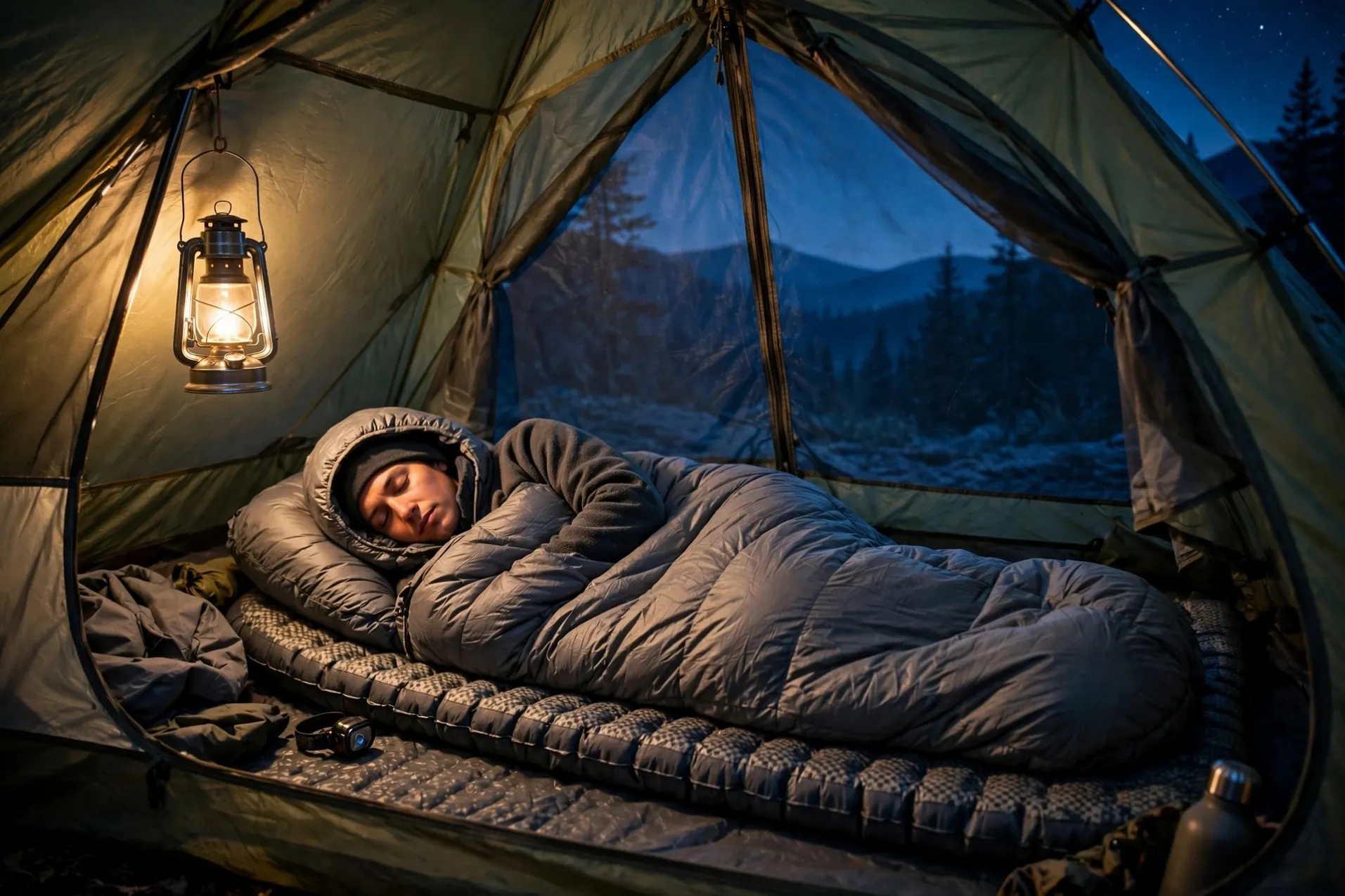
A bag marked Comfort 5 °C · Limit -5 °C · Extreme -15 °C is a three-season bag for most users — not a -15 °C expedition bag, however the marketing reads.
How to spec ratings for your market
Match the Comfort rating to your customers' coldest typical night, not their worst-ever night. Family camping ranges usually sell best around Comfort 5–15 °C; trekking lines need Comfort 0 to -10 °C; genuine winter lines go below that, with weight and price rising fast. Our range covers this span — for example, heated models rated Comfort 0–8 °C for shoulder-season comfort, and double-layer models down to Extreme -20 °C for cold markets.

The takeaway for buyers
Ask every supplier two questions: which standard was the rating tested to, and is the headline number Comfort or Extreme? If the answer is vague, the rating is too. Send us your target market and season, and we will recommend ratings — and the filling weights behind them — for your range.